

After the Storm
Everyone Had an Opinion, But No One Had Gloves

Yesterday, our small town took a hit. The day had been suffocating under 36°C (97°F), the humid kind of heat that presses down on your chest and makes everything feel slow and heavy. Then the sky turned. Not gradually, not politely. It dropped into a deep, almost theatrical black. Civil protection warnings went out. People looked up.
Fifteen minutes later, it was over.
Fifteen minutes that were enough to tear through the town with surgical brutality. Trees snapped at the roots as if someone had taken a saw to them. Branches crashed down in every direction. The massive tent from the town festival didn’t stand a chance — it now has to be retrieved from the trees by the fire brigade.
The storm was short. The damage wasn’t.
After the Storm, the Real Work Begins
This morning, the heat returned like nothing had happened. Another 36°C. The kind of indifference only weather can afford.
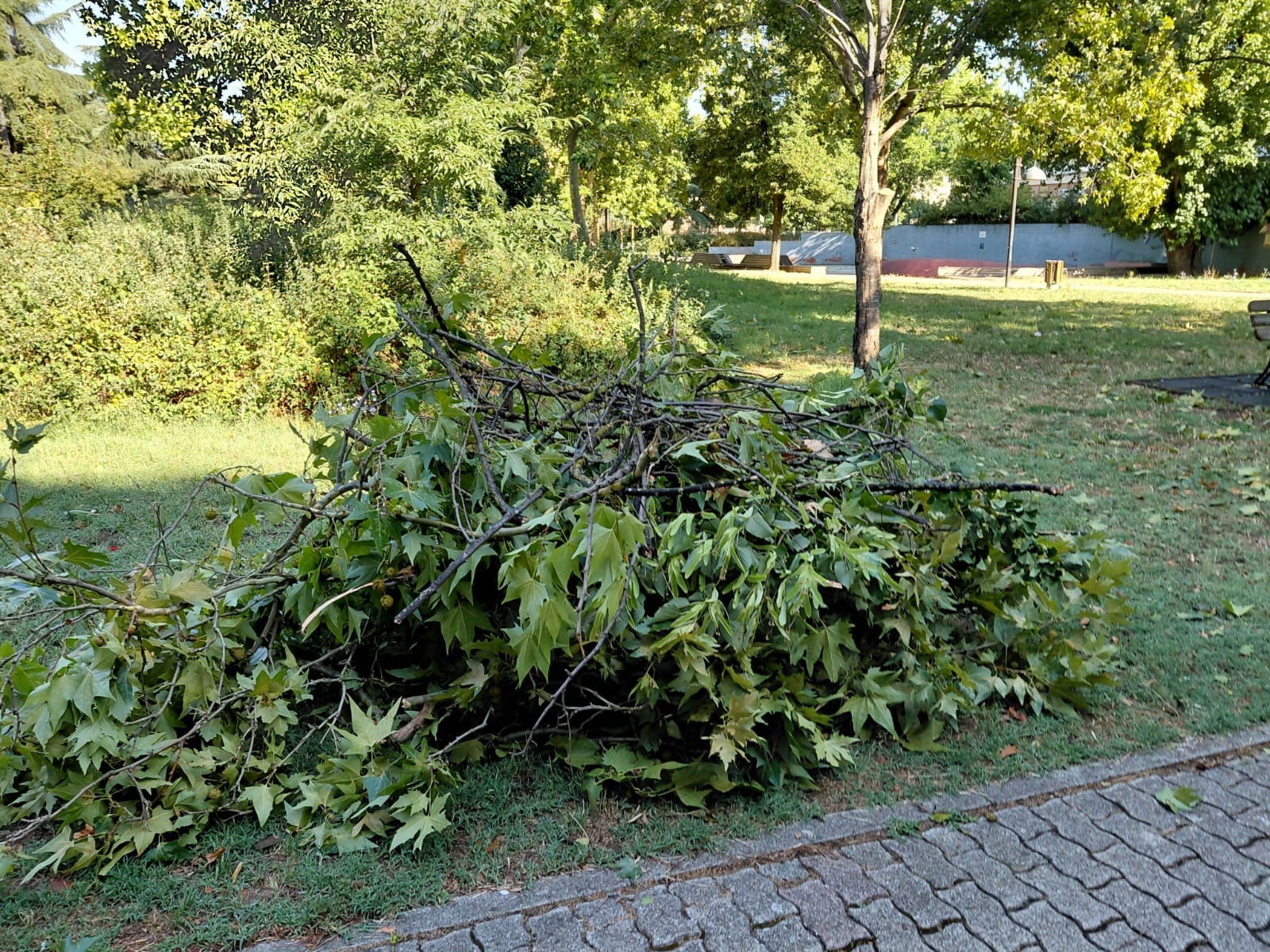
In the park right in front of our home, the aftermath was impossible to ignore. Branches everywhere. Paths blocked. The playground — one of the most used spaces in the area — was barely accessible.
Municipal workers are doing what they can, but they are stretched thin. There are priorities. And a park, even a busy one, is not at the top of that list when the entire town needs attention. It could take days before anyone gets around to it.
My grandfather wouldn’t have waited. He would have gone to the garage, grabbed a chainsaw, and started clearing. I don’t own a chainsaw. And frankly, I respect those machines enough to keep my distance. But I do own safety boots, sturdy pants, a bright orange helmet, and gloves. That’s enough to move branches. Enough to make a difference. And, if I’m being honest, I needed the exercise.
So I started working.
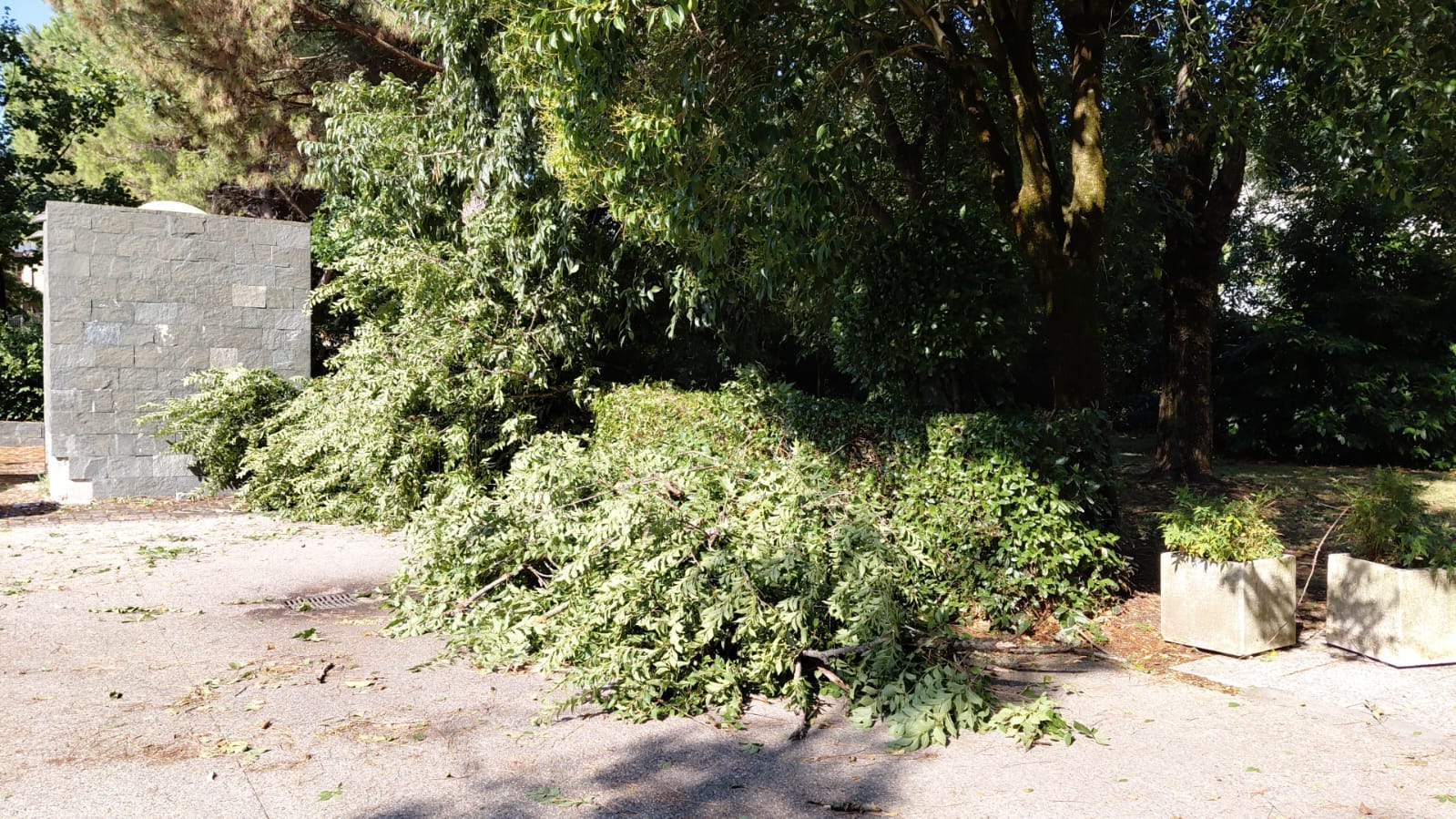
By the time I was done, four massive piles of branches stood ready — neatly stacked, easy for the municipality to collect. The kind of small intervention that actually helps.
The Spectators
What struck me wasn’t the work. It was the audience.
People passed through the park constantly. Most women I saw were still processing what had happened. They talked about the storm, the fear, the shock. That made sense.
What made far less sense were the men.
At one point, three of them stood at a comfortable distance, watching me work. Not offering help. Not asking questions. Just watching. Apparently, it’s socially acceptable to observe a woman doing physical labor as if it were a street performance.
One of them pointed out that there were more branches lying on the piazza nearby. Helpful. Truly.
Another needed three separate reminders to call his dog away from the pile I was building, because the animal — and its leash — were directly in my way.
Others spoke to me in half-mumbled dialect, offering commentary I couldn’t even fully understand. Advice, presumably. There is always advice.
And then came the lecture.
One man explained to me that tall trees are dangerous and that the municipality should remove them. After all, cars are parked underneath. They could be damaged.
Cars.
I informed him that I don’t work for the municipality. I’m just someone who decided to help. And since I had reached my limit with unsolicited expertise, I told him what would actually make sense: more greenery, not less. Bushes under trees. Layers that break the wind. A system, not a shortcut.
He looked at me like that was an exotic idea. Then told me he had also done volunteer work — some windows at the swimming pool had been blown out. So he understood, at least partially. But the reflex remained the same.
A Culture of Commentary Over Action
This is the part that should bother us.
Almost no one steps in. Almost everyone has something to say.
Advice is cheap. Action costs something — time, effort, sweat (a lot…), a willingness to look slightly ridiculous while doing manual work in public. And that cost is apparently too high for most.
Would those same men have stood there and talked like that if municipal workers had been clearing the park? Unlikely.
There’s also a deeper layer that’s harder to ignore. The priority wasn’t people who could get hurt by falling branches. Not the trees themselves, which take decades to grow and minutes to destroy. The concern was parked cars. That’s not just a throwaway comment. That’s a value system.
What We Actually Need
Storms like this aren’t rare anomalies anymore. They are previews.
If we respond by cutting down trees to “reduce risk,” we’re solving the wrong problem and making the real one worse. Heat will intensify. Urban spaces will become even more hostile. The next storm won’t be less destructive — it will hit harder.
We don’t need fewer trees. We need more.
Denser planting. Bushes beneath trees to break wind patterns. Taller grass. More green surfaces to absorb heat instead of radiating it back into the air. Infrastructure that works with nature instead of trying to dominate it.
And we need a shift in behavior that’s even simpler. Less commentary. More action. Less staring. More doing. Because in the end, it took fifteen minutes for the storm to tear things apart. It took me two hours to start putting a small piece of it back together.
And that gap — between destruction and response — is where character shows.
Saskia Karges is a corporate strategist for Fortune 500 companies and a solarpunk author. She specializes in bridging the gap between rigid business operations and radical creative visions for a sustainable future. Her work explores neurodiversity in leadership and the systemic shifts needed to build resilient, circular societies.
Her novel, AMATEA — Memoirs of the Last City (2026), dives deeper into these themes, exploring the thin line between a sustainable utopia and an eco-fascist dystopia. You can find her insights on strategy and creative rebellion on Medium and follow her mission to amplify unique voices and planetary health.